Industrial automation is evolving at a rapid pace. Today, remote access and remote monitoring are no longer optional features-they have become a basic requirement for modern industrial plants. Engineers need to access PLCs, HMIs, VFDs, and SCADA systems from anywhere for troubleshooting, programming, and monitoring.
However, as connectivity increases, security risks also increase. This is where VPN (Virtual Private Network) plays a critical role in industrial automation systems.
In this blog, we will understand:
- What a VPN is
- Why VPN is essential for industrial networks
- Hardware used in industrial VPN setups
- OpenVPN architecture
- Why VPN is safer than port forwarding
- A real-world industrial example
In this blog, we will explain VPN in Industrial Automation, why it is essential, what hardware is used, and how it works with a real industrial example.
Traditional vs Modern Industrial Networks
Traditionally, industrial networks were fully isolated from the outside world. PLCs, HMIs, and control panels were connected only through local networks, with no external access.
But modern industrial plants now require:
- Cloud reporting and dashboards
- Remote technical support
- Third-party system integration
- Centralized monitoring from control rooms
As these networks become more open, cybersecurity threats increase significantly. Direct internet exposure of industrial devices is extremely risky.
What Is a VPN and Why Is It Important?
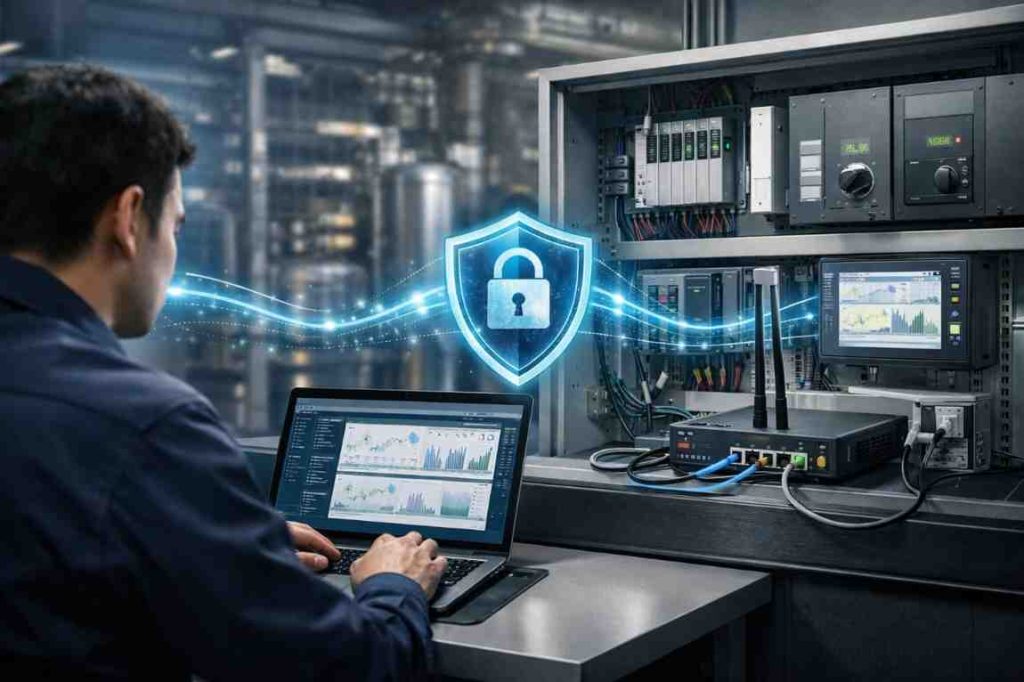
A VPN (Virtual Private Network) creates an encrypted tunnel between two endpoints over the public internet. All data passing through this tunnel is secure, encrypted, and protected from unauthorized access.
In an industrial VPN setup:
- PLCs, VFDs, HMIs, and other devices communicate securely
- Data does not travel openly over the internet
- Devices remain hidden from public exposure
- Only authenticated users can access the network
This makes VPNs the most reliable and professional solution for industrial remote access.
Industrial Hardware Used in VPN Networks
Industrial VPN systems require specialized hardware designed to operate reliably in harsh industrial environments.
Commonly used components include:
- Industrial 4G VPN routers
- Industrial VPN gateways
- Managed industrial network switches
- Secure firewall devices
These devices are built to withstand:
- High temperatures
- Electrical noise
- Continuous operation
- Remote and unattended locations
For remote sites, industrial 4G routers are most commonly used.
Role of Static Public IP in Industrial VPN
Most mobile networks operate behind NAT (Network Address Translation), which means direct inbound access is not possible.
To solve this:
- A static public IP is used
- This allows the VPN server or gateway to be reachable from the internet
- At least one public IP is required for the complete VPN network
Once configured, secure communication becomes stable and predictable.
OpenVPN Architecture in Industrial Automation
OpenVPN is one of the most widely used and trusted VPN technologies in industrial applications.
A typical OpenVPN setup includes:
- One OpenVPN server (cloud or on-premise)
- VPN certificates for server and clients
- Industrial 4G router configured as OpenVPN client
- Remote engineer’s laptop connected as another VPN client
When connected:
- All devices become part of the same virtual network
- PLC programming access becomes possible remotely
- HMI monitoring and troubleshooting work seamlessly
- Engineers can work as if they are on-site
Port Forwarding vs VPN: Why VPN Is Safer
Many engineers still use port forwarding for remote access, but it is not safe for industrial environments.
Problems with Port Forwarding
- Devices are directly exposed to the internet
- High risk of brute-force attacks
- No encryption
- Poor scalability
- Extremely unsafe for PLCs and HMIs
Advantages of VPN
- Devices are not publicly exposed
- End-to-end encrypted communication
- Strong authentication using certificates
- Scalable and professional solution
- Industry-recommended security approach
Because of these reasons, industrial PLCs should never be directly exposed to the internet.
Real-Life Industrial VPN Example
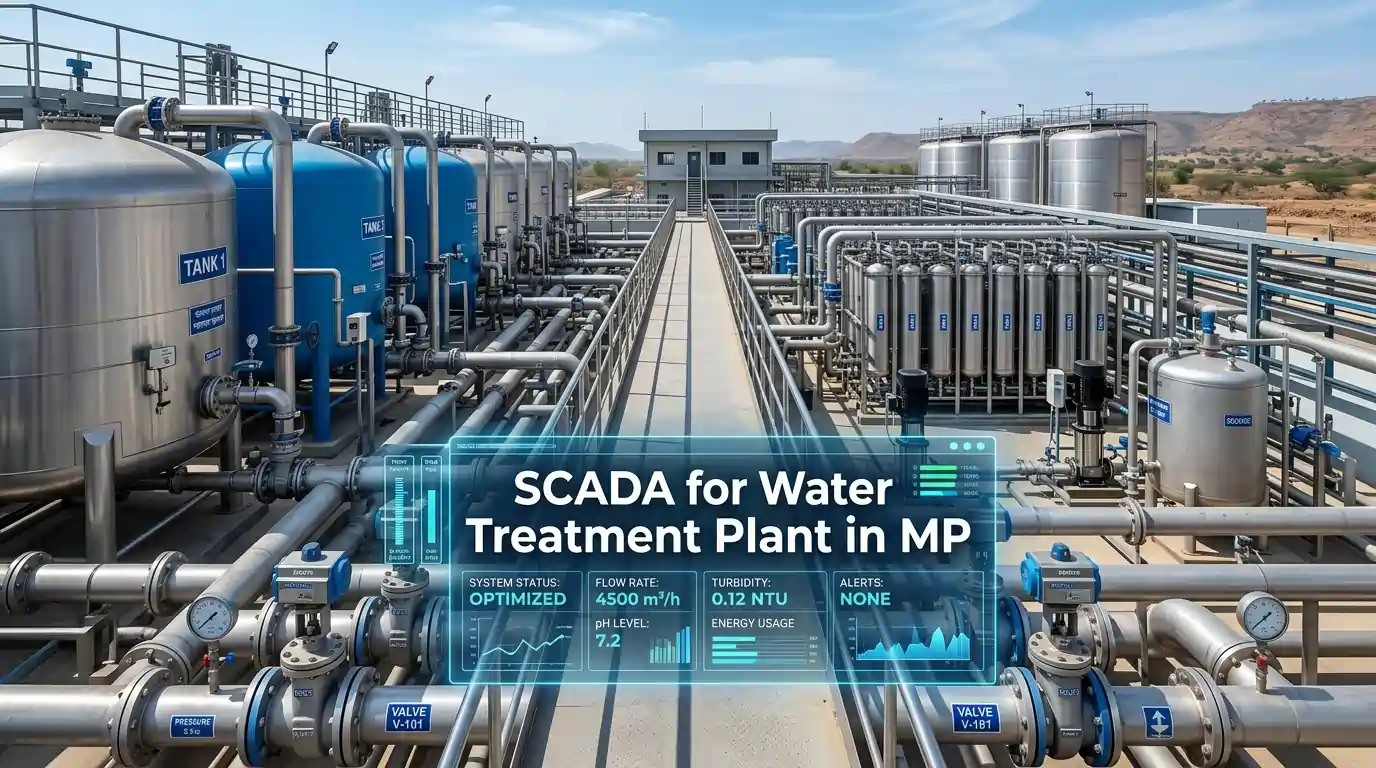
Consider a water treatment plant that needs to be monitored from a central control room.
Setup Overview
- Industrial 4G router installed at the remote site
- OpenVPN client configured inside the router
- VPN server configured at the control room or cloud
- Engineers connect securely from office laptops
How It Works
- When the router powers ON, it automatically connects to the VPN server
- A secure encrypted tunnel is created
- Engineers can access PLCs remotely
- Monitoring and control happen in real time
- No device is exposed to public internet
This setup ensures secure, reliable, and uninterrupted remote operations.
Why VPN Is Mandatory in Industrial Automation
In modern automation systems:
- Remote access is unavoidable
- Cyber threats are increasing
- Compliance and safety are critical
VPN provides:
- Security
- Reliability
- Scalability
- Professional system architecture
That is why VPN is not an option anymore-it is a necessity for industrial automation.
Final Thoughts
As industrial systems continue to move toward Industry 4.0, secure remote connectivity becomes the foundation of reliable automation.
Using VPNs ensures that:
- Data remains protected
- Systems stay safe from cyber attacks
- Engineers can work efficiently from anywhere
If you are working with PLCs, SCADA, VFDs, or industrial IoT systems, VPN should always be your first choice for remote access.