Accurate temperature measurement is critical for every industrial process – from chemical manufacturing to power generation. Even a small variation can affect product quality, safety, and equipment lifespan.That’s where PT100 RTD sensors come in.
Known for their precision and reliability, these devices convert temperature changes into measurable electrical resistance. Understanding how a PT100 RTD chart works helps engineers monitor and control systems more efficiently, especially when integrated with PLC integration and IoT monitoring devices.
What Is a PT100 RTD Sensor?
The term PT100 RTD stands for Platinum Resistance Temperature Detector. “PT” refers to the platinum element, while “100” indicates a resistance of 100 ohms at 0 °C.These sensors are popular in industries because of their linear accuracy, stability, and wide temperature range (-200 °C to +850 °C).
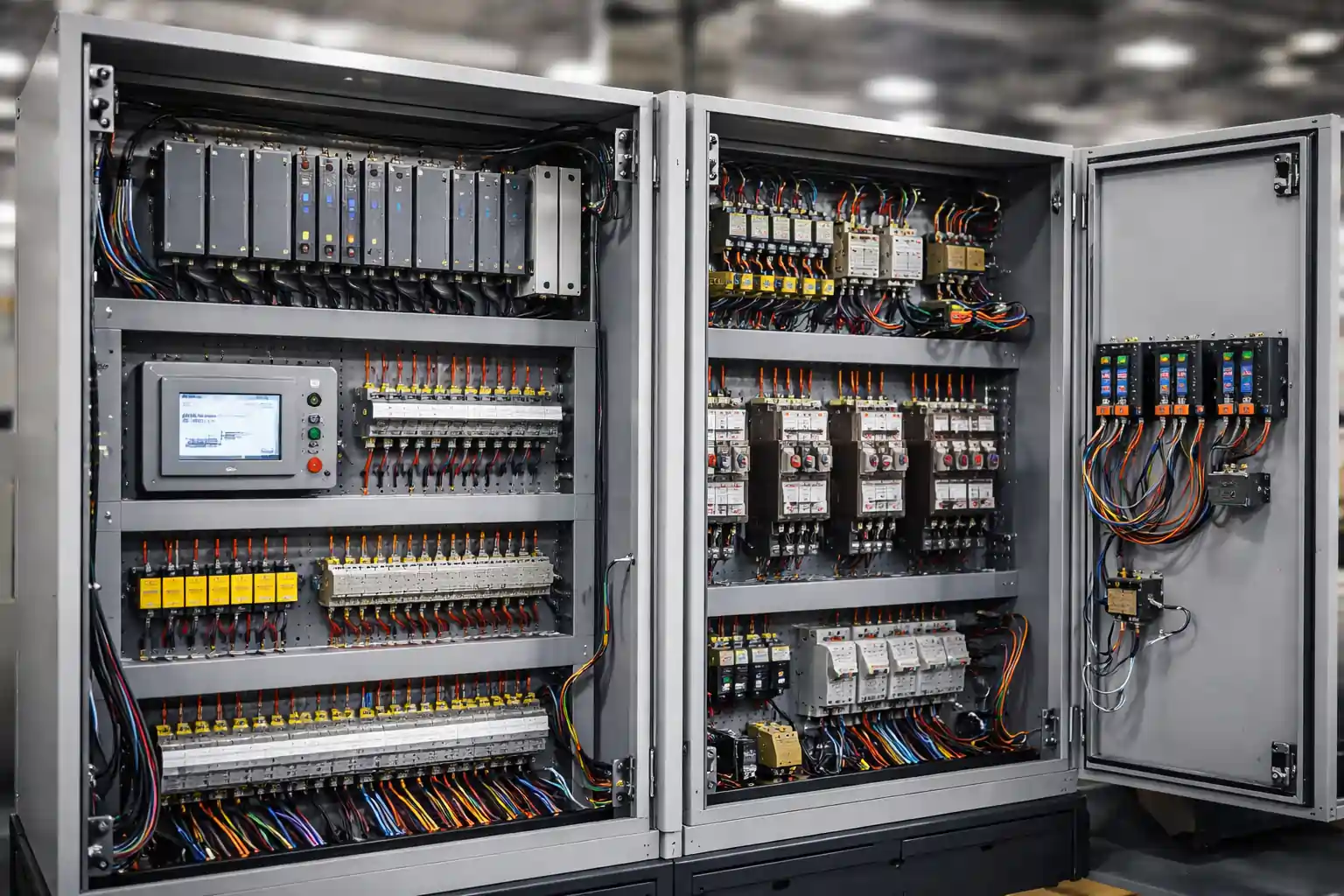
As the temperature increases, the resistance in the platinum element also increases proportionally – providing an accurate, repeatable signal to control systems.A PT100 RTD can easily interface with PLC panels and data acquisition systems, enabling smart automation and consistent temperature regulation across complex machinery.
How Does a PT100 Sensor Work?
A Resistance Temperature Detector operates on a simple principle: electrical resistance of a metal changes with temperature.In the case of platinum, the resistance rises linearly as temperature increases. The measurement circuit detects this change and converts it into a precise temperature reading.
This high sensitivity and reliability make PT100 RTDs the preferred choice for applications requiring tight temperature tolerance – such as pharmaceuticals, food processing, and semiconductor manufacturing.
Understanding the PT100 RTD Chart
A PT100 RTD chart or PT100 resistance chart lists temperature values against their corresponding electrical resistance (in ohms).
At 0 °C, the resistance measures 100.00 Ω.
When the temperature rises to 100 °C, it reaches about 138.50 Ω.
By 200 °C, the resistance increases further to nearly 175.86 Ω.
Engineers use this RTD temperature chart during calibration and troubleshooting to verify sensor accuracy. It’s also a quick reference for converting measured resistance into temperature when a digital transmitter isn’t available.
Having a PT100 RTD table readily accessible ensures faster diagnostics and improved process safety in temperature-critical industries.
Types of RTD Sensors Used in Industries
RTD sensors come in different wiring configurations based on accuracy requirements:
- 2-Wire RTD: Simplest form; wire resistance can cause small errors – used in basic applications.
- 3-Wire RTD: Most common industrial setup; compensates for lead resistance.
- 4-Wire RTD: Used in precision systems where extremely accurate readings are required.
All these RTD types can be integrated into PLC systems to automate feedback loops, alarms, and data logging.
Applications of PT100 RTD Sensors in Industries
The versatility of PT100 RTDs allows them to function in nearly every industrial sector. Key applications include:
- Manufacturing and Automation: Temperature control in furnaces, molds, and assembly lines.
- Energy and Power Plants: Monitoring boilers, turbines, and exhaust gases.
- Food and Beverage: Ensuring hygiene and consistent product quality.
- HVAC and Refrigeration: Maintaining ambient and process temperatures.
- Chemical Processing: Monitoring reactors and distillation systems for safety.
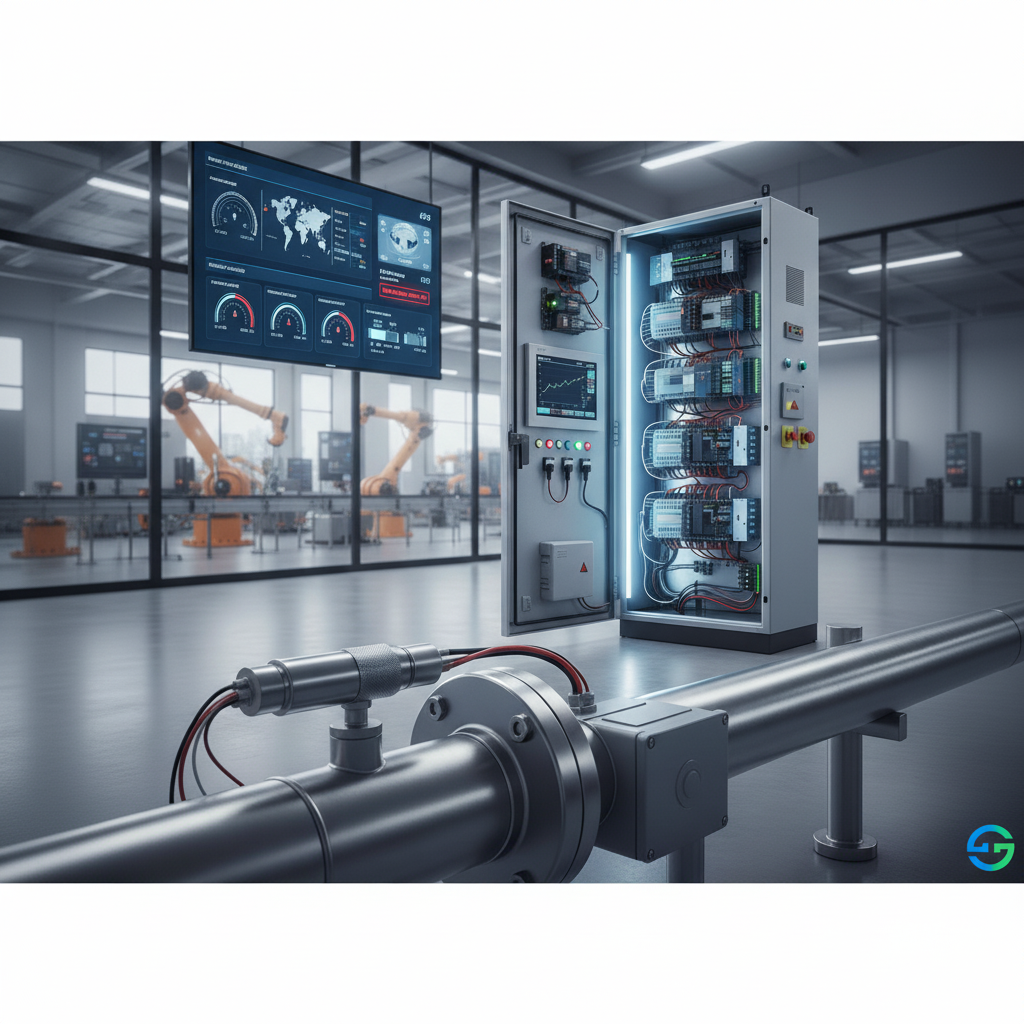
When connected with PLC integration and IoT monitoring devices, these sensors enable real-time alerts, predictive maintenance, and cloud-based analytics – creating smarter, data-driven operations.
Advantages of Using PT100 RTD Sensors
- High Accuracy: Minimal error margin, suitable for critical systems.
- Stability: Performs consistently over years of usage.
- Wide Temperature Range: Works in extreme industrial conditions.
- Interoperability: Compatible with PLCs, SCADA, and IoT platforms.
- Low Maintenance: Easy to install, calibrate, and replace.
In combination with IoT monitoring devices, these benefits extend beyond control rooms – giving engineers access to temperature insights anytime, anywhere.
FAQs
Q1. What is the purpose of a PT100 RTD chart?
It provides reference resistance values at specific temperatures, used for calibrating and validating RTD sensor performance.
Q2. How do PT100 RTDs connect with PLC systems?
Through analog input modules or transmitters. The PLC integration reads the resistance data, converts it to temperature, and automates control functions based on preset limits.
Driving Industrial Precision Forward
As industries move toward smarter and more connected systems, understanding and utilizing PT100 RTD charts has become essential.
By merging accurate temperature sensing with advanced automation and IoT technologies, Aknitech helps businesses maintain operational excellence and reliability – one precise degree at a time.
How Aknitech Integrates RTD Sensors with Automation Systems
At Aknitech, we design and implement automation solutions that pair PT100 RTD sensors with intelligent control systems.
Our PLC integration expertise ensures each temperature reading contributes to optimized energy use, safer equipment operation, and better production efficiency.
Through IoT-based dashboards, operators can visualize trends, set thresholds, and automate actions, ensuring smooth, energy-efficient performance across industries.