In the modern industrial world, energy management with IoT is redefining how businesses achieve efficiency and sustainability. Rising electricity costs, unpredictable energy demands, and the need for operational transparency have pushed industries to rethink traditional energy strategies. By integrating the Internet of Things (IoT) into energy systems, companies are building smart grids, connected devices, and intelligent monitoring platforms that transform how energy is consumed and conserved.
For innovative industrial automation providers like AKNITech, energy management with IoT has become the foundation of smart manufacturing and process optimization.
For companies like AKNITech, which specialize in industrial automation and IoT integration, energy management has become a cornerstone of smart manufacturing and process optimization.
Understanding Energy Management with IoT
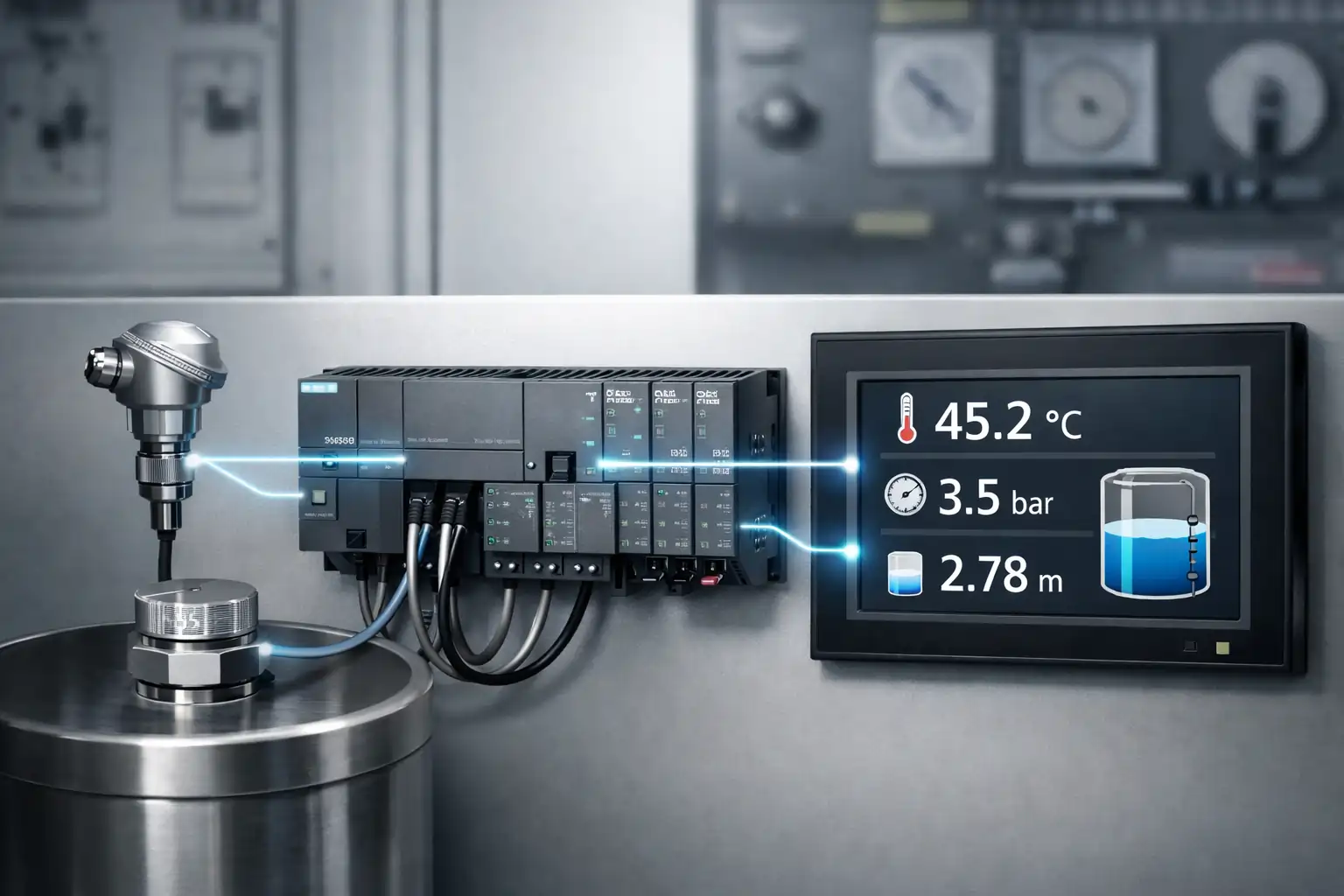
Energy management with IoT refers to the use of connected devices and sensors that collect real-time data on energy usage across machines, systems, and facilities. This data is then analyzed to identify wastage, predict demand, and automate control mechanisms for optimal consumption.
Unlike traditional monitoring systems that rely on manual input and static reports, IoT-based solutions use cloud-connected sensors and gateways that offer continuous visibility. This allows plant operators and facility managers to make data-driven decisions and achieve higher efficiency with minimal human intervention.
How Smart Grids Enable Smarter Industries
A smart grid is the backbone of IoT-based energy management. It’s an intelligent electrical network that uses digital communication technology to detect and react to local changes in usage. Through IoT-enabled meters, transformers, and control panels, industries can achieve real-time synchronization between energy supply and demand.
Smart grids empower industries to:
Automatically balance energy loads during peak hours.
Reduce downtime by identifying faults before they escalate.
Integrate renewable sources like solar or wind energy into daily operations.
Improve energy reliability and reduce operational costs.
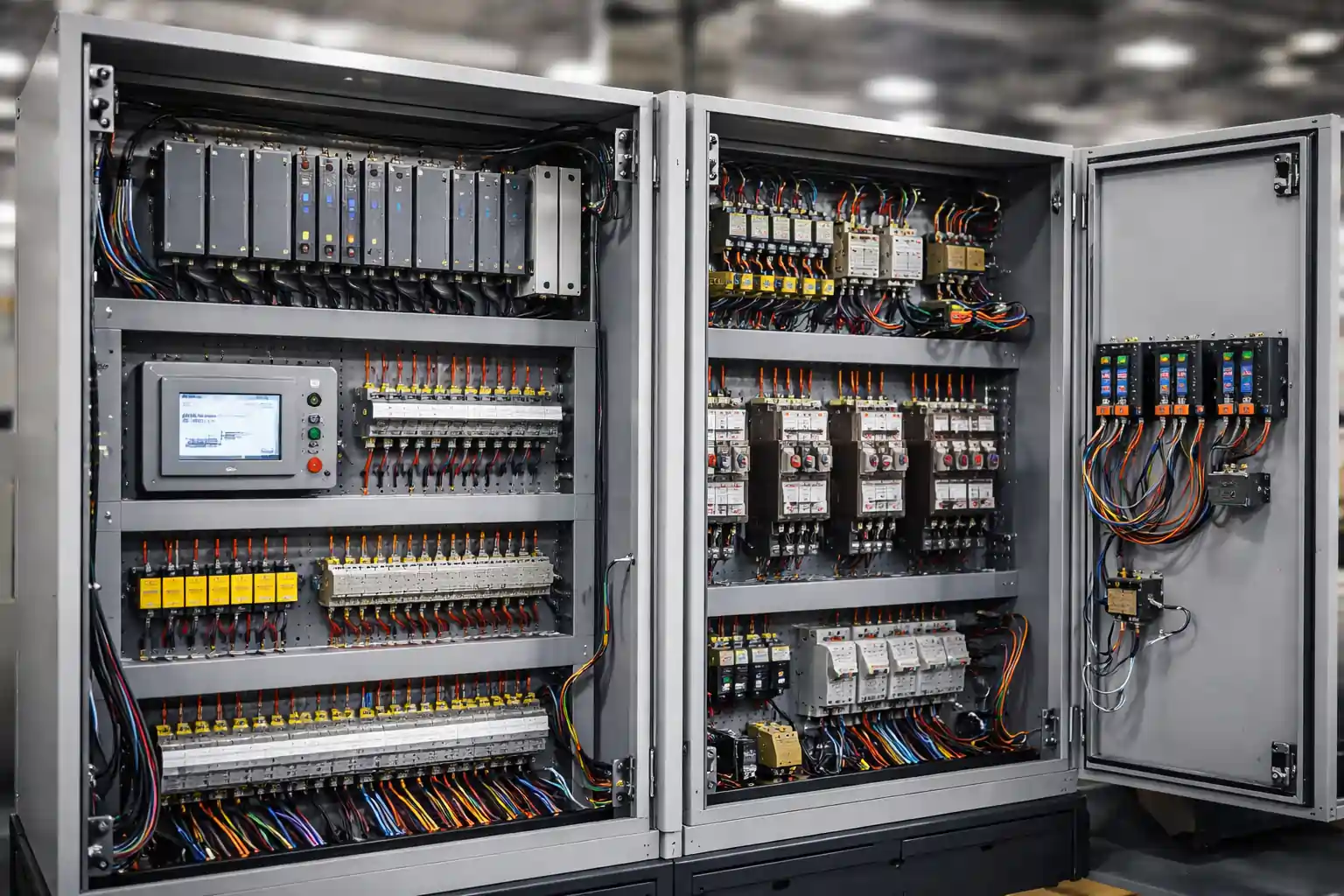
In many industrial environments, smart grids work alongside systems such as Programmable Logic Controllers (PLCs) and Supervisory Control and Data Acquisition (SCADA) platforms – both of which are core expertise areas of AKNITech. These integrations ensure smoother coordination between machines and the energy network.
Benefits of IoT in Industrial Energy Efficiency
IoT brings multiple tangible advantages to industrial energy management. Here are some of the most impactful ones:
1. Real-Time Monitoring
IoT sensors continuously track parameters like voltage, current, power factor, and machine health. This visibility allows engineers to instantly detect inefficiencies or abnormal energy usage.
2. Predictive Maintenance
With data analytics and AI algorithms, IoT systems can predict when a motor, panel, or transformer might fail due to energy fluctuations – preventing costly breakdowns.
3. Reduced Energy Waste
By analyzing patterns of consumption, IoT platforms automatically shut down idle machines or optimize load distribution, saving significant energy without affecting productivity.
4. Lower Operational Costs
Automated controls and efficient energy use directly translate to reduced electricity bills and extended equipment life.
5. Sustainability and Compliance
Many organizations aim for carbon reduction and ISO certifications. IoT systems simplify energy audits and help maintain compliance with sustainability standards.
Applications of Energy Management with IoT Across Industrial Environments
IoT-driven energy management is not limited to power plants or utility companies. Its applications now span across multiple industries and facility types.
1. Manufacturing Units
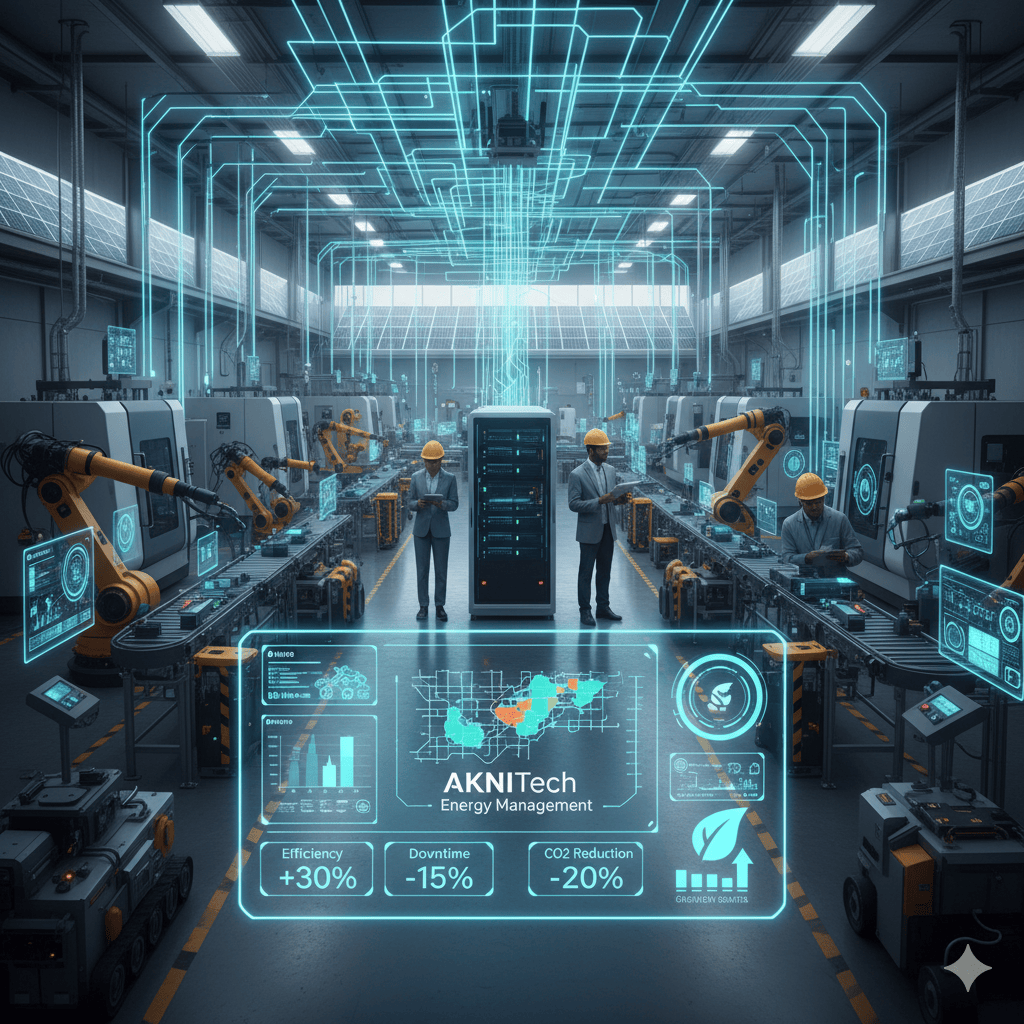
Factories use IoT sensors to monitor machine energy usage and production efficiency. Real-time dashboards help engineers adjust operations to minimize waste and downtime.
2. Smart Buildings and Campuses
IoT systems control lighting, HVAC, and electrical loads based on occupancy or weather data – optimizing comfort and energy use simultaneously.
3. Water and Wastewater Plants
Energy-intensive systems like pumps and filtration units are monitored for efficiency, helping facilities reduce overall operational costs.
4. Renewable Energy Systems
IoT helps manage distributed energy sources like solar and wind, synchronizing them with main grids for seamless integration.
5. Utilities and Distribution Networks
Smart meters and remote control panels enhance reliability by giving operators real-time visibility into grid performance.
The Role of AKNITech in IoT-Based Energy Management
AKNITech has been at the forefront of industrial automation and IoT innovation in India. Its expertise in PLC control panels, SCADA systems, and IoT device management allows industries to move from traditional energy control to fully automated, data-driven ecosystems.
The company’s energy management solutions integrate advanced sensors, analytics platforms, and intuitive dashboards that help organizations monitor, manage, and optimize energy performance at every level. By bridging hardware and software systems, AKNITech ensures seamless energy communication between field devices and enterprise networks – making industries smarter, cleaner, and more efficient.
Future of Smart Energy Management with IoT in Industrial Automation
As IoT technology continues to evolve, energy management will move toward even more autonomous systems. Artificial Intelligence (AI) and Machine Learning (ML) will analyze vast datasets to predict future consumption trends. Edge computing will make real-time decision-making faster, and 5G connectivity will enhance communication between industrial devices.
In the near future, industries will rely on fully integrated smart energy ecosystems where every component – from machines to meters – collaborates in real time to achieve maximum efficiency. Companies that adopt these innovations early will gain a strong competitive advantage in both sustainability and cost efficiency.
Frequently Asked Questions (FAQs)
1. What is IoT-based energy management?
IoT-based energy management uses connected sensors and devices to collect real-time data on energy usage. This data helps industries optimize performance, reduce waste, and make informed energy decisions.
2. How do smart grids improve industrial efficiency?
Smart grids balance power loads, detect faults early, and integrate renewable sources. They ensure continuous energy flow while reducing operational costs and downtime.
3. Can small industries also use IoT for energy management?
Yes, IoT-based systems can be scaled according to business size. Even small manufacturing units can benefit from basic monitoring sensors and dashboards.
4. What technologies support IoT energy management systems?
PLC, SCADA, and AI-based analytics platforms play major roles in managing, visualizing, and controlling industrial energy systems efficiently.
5. How does AKNITech help industries implement IoT solutions?
AKNITech designs and integrates customized automation systems combining IoT, SCADA, and energy management technologies – helping businesses achieve smarter, data-driven operations.
Conclusion
The integration of IoT into energy management marks a revolutionary step for industries striving for efficiency and sustainability. Smart grids, intelligent sensors, and connected control systems have reshaped how energy is consumed and conserved.
By adopting IoT-based energy management systems, industries can achieve real-time monitoring, predictive maintenance, and measurable cost savings, paving the way toward a greener and more productive future.
AKNITech continues to lead this transformation by delivering smart automation solutions that empower businesses to manage energy smarter, operate cleaner, and perform better – today and for the future.