
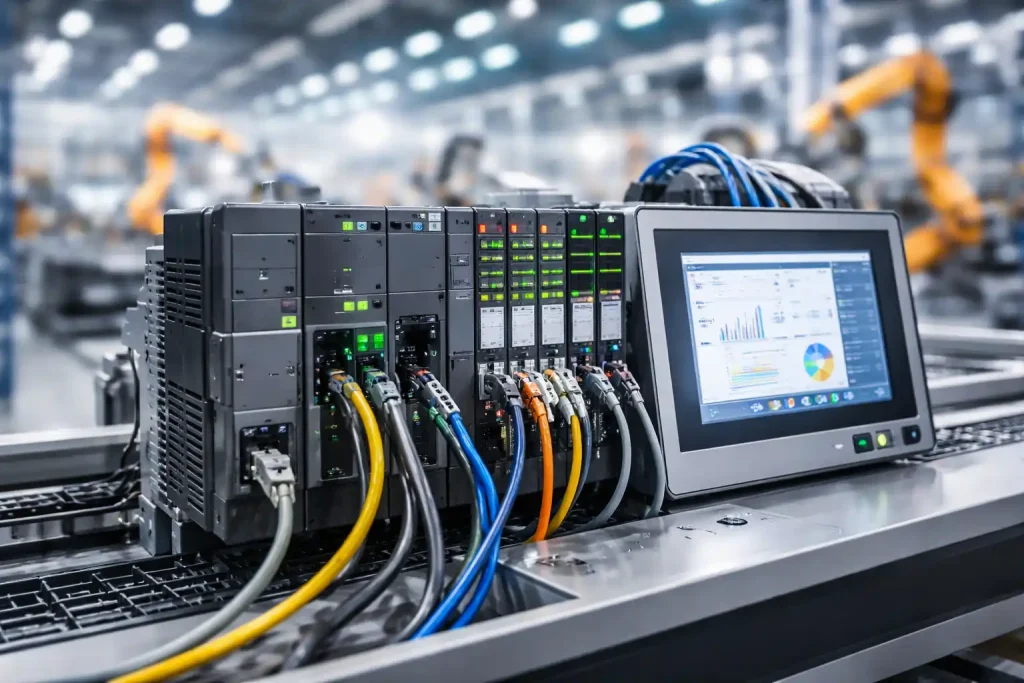
In high-load industrial environments, machines run for long hours and handle large motors, conveyors, and heavy-duty equipment. In such conditions, the selection of the right PLC modules directly affects performance and safety. The correct PLC modules for high-load industrial operations help reduce downtime, improve control accuracy, and ensure stable automation in demanding industries.
What Are PLC Modules in Industrial Automation?
PLC modules are the core building blocks of a programmable logic controller. They allow the PLC to receive signals from field devices, process the logic, and send commands back to machines. In simple terms, PLC modules act as the communication bridge between the control system and the physical equipment.
A typical PLC system is built using different modules that work together. These modules receive signals from the field, process logic, and send commands back to machines.
In industrial automation PLC components, modules are selected based on load type, number of devices, environmental conditions, and process complexity. For high-load industrial operations, the modules must be strong, stable, and capable of handling heavy electrical demands.
Types of PLC Modules Used in Heavy Industries
Heavy industries use a mix of modules depending on the process and equipment involved. The most common PLC input output modules used in such environments include digital and analog types.
1) Digital Input Modules
These modules receive ON/OFF signals from:
- Limit switches
- Push buttons
- Sensors
- Relays
They are widely used in PLC for heavy machinery where simple status signals are required.
2) Digital Output Modules
These modules send ON/OFF commands to:
- Contactors
- Solenoid valves
- Indicator lights
- Motor starters
They are essential for automation for large motors and heavy equipment.
3) Analog Input Modules
These modules read variable signals such as:
- Temperature
- Pressure
- Flow rate
- Speed
They are important in industrial process control PLC systems.
4) Analog Output Modules
These modules control devices that need variable signals, such as:
- VFDs
- Control valves
- Servo drives
They are commonly used in PLC for high power loads.
5) PLC Expansion Modules
Expansion modules increase the capacity of a PLC system. They are used when:
- More I/O points are required
- The plant expands
- Additional machines are added
These are important in heavy duty PLC systems where the number of devices is high.
Why High-Load Operations Need Special PLC Modules
High-load operations are very different from small or medium automation setups. Industries such as cement, steel, water treatment, and heavy manufacturing run machines that draw high current and operate continuously.
In such environments, the PLC is not just switching small signals. It is controlling large motors, high torque machines, and complex processes. Standard modules may work in light-duty applications, but they may not last long in harsh industrial conditions.
High-load operations often involve:
- Continuous 24/7 machine operation
- Large motors and high power loads
- High temperature, dust, or vibration
- Frequent switching of heavy equipment
Because of these factors, industries require rugged PLC modules and high current PLC modules. These modules are built with stronger components, better insulation, and improved heat handling. They are designed specifically for industrial automation controllers used in heavy-duty environments.
Key Factors to Consider When Choosing PLC Modules
Many engineers ask how to choose PLC modules for high load machines?. The answer lies in understanding the process, the load, and the environment.
1) Load Type and Power Requirements
First, understand the type of equipment:
- Small sensors and relays
- Medium-size motors
- Large high-torque machines
For PLC for high torque machines, modules must handle higher current and voltage ratings.
2) Number of I/O Points
A common question is:
“How many I/O modules are needed in a PLC?”
The answer depends on:
- Number of sensors
- Number of actuators
- Future expansion
Always plan for:
- 20–30% extra I/O capacity
- Future machine additions
This approach ensures better PLC hardware selection and avoids system redesign later.
3) Environmental Conditions
Heavy industries often have:
- High temperatures
- Dust and vibration
- Moisture or chemicals
In such cases, choose:
- Industrial-grade modules
- Shock-resistant modules
- High-temperature rated modules
These industrial control modules are designed for harsh conditions.
4) Communication and Networking Needs
Modern automation systems require communication between:
- PLCs
- HMIs
- SCADA systems
- Drives and sensors
Select modules that support:
- Industrial Ethernet
- Modbus
- Profinet or Profibus
This is important in industrial automation controllers used in large plants.
5) Expansion and Scalability
In PLC modules for manufacturing plants, production lines often expand.
Choose PLC systems that support:
- PLC expansion modules
- Additional racks
- Remote I/O stations
This ensures long-term flexibility.
Difference Between Analog and Digital PLC Modules
| Feature | Digital Modules | Analog Modules |
| Signal type | ON/OFF | Variable values |
| Common devices | Switches, relays | Sensors, transmitters |
| Typical use | Machine control | Process control |
| Accuracy level | Basic | High precision |
| Application | Simple automation | Complex industrial processes |
Both types are essential in PLC for high load machines, especially where heavy motors and precise process control work together.
Best PLC Modules for Heavy Duty Applications
When selecting the best PLC modules for heavy duty applications, reliability should be the top priority. In high-load industries, even a small module failure can stop the entire production line.
High performance PLC modules are designed to handle continuous operation, heavy electrical loads, and harsh conditions. These modules usually offer better heat resistance, higher current capacity, and longer service life.
Look for these qualities in reliable PLC modules for industry:
- High current handling capacity
- Industrial-grade protection
- Long service life
- Easy maintenance and replacement
- Strong brand and technical support
Reliable high performance PLC modules reduce downtime and improve productivity. Industries that rely on large motors, compressors, or conveyors often choose such modules to ensure stable performance.
Common Applications of PLC Modules in High-Load Industries
PLC modules are widely used across industries where heavy equipment and continuous processes are involved. In manufacturing plants, they control conveyors, presses, and packaging machines. These setups often use industrial PLC modules for large motors and high-capacity drives.
In water treatment plants, PLC modules manage pump control, flow regulation, and chemical dosing. These systems require stable PLC for high power loads to ensure uninterrupted operation.
Cement and steel plants rely heavily on PLC for heavy machinery. From kiln automation to material handling systems, these industries depend on rugged PLC modules that can survive extreme conditions.
In the power and energy sector, PLC modules are used for generator control, load management, and substation automation. Here, industrial automation controllers play a key role in maintaining system stability. In these sectors, industrial PLC modules for large motors and heavy equipment are essential for safe operation.
Practical Tips for PLC Module Selection
If you are looking for an industrial PLC module selection guide, the best approach is to start with a proper system study. Understand the process, identify all input and output devices, and calculate the total I/O requirements.
Practical steps for heavy duty PLC I/O module selection:
- Analyze the load and process requirements
- List all sensors, motors, and actuators
- Calculate total I/O points
- Keep extra capacity for expansion
- Select industrial-grade modules
- Check communication compatibility
This approach helps in proper PLC selection for high power industrial equipment and reduces future system changes.
Common Mistakes to Avoid
Many automation issues occur because of poor module selection. These mistakes often lead to downtime, higher maintenance, and system instability.
Avoid these common errors:
- Choosing modules only based on price
- Ignoring future expansion needs
- Using low-grade modules in harsh environments
- Underestimating I/O requirements
- Not checking communication compatibility
Proper planning ensures reliable PLC hardware for high load operations and smoother plant performance.
How the Right PLC Modules Improve Performance
The right PLC modules for high-load industrial operations ensure stable machine control and better process reliability. They help industries avoid sudden breakdowns, improve safety, and maintain accurate process control.
In heavy industries, the PLC system acts as the brain of the operation. When the modules are properly selected, machines run smoothly, maintenance becomes easier, and production efficiency improves. This is why investing in the right PLC hardware is critical for long-term performance.
Are Specialized PLC Modules Worth It?
For small or low-power machines, standard PLC modules may work without major issues. But in high-load industrial environments, specialized modules provide clear advantages.
They:
- Handle heavy loads safely
- Perform better in harsh conditions
- Reduce unexpected failures
- Support future expansion
- Offer longer service life
For industries running large motors, high torque machines, and complex processes, the right PLC modules are not just an upgrade-they are a necessity.
Need Help Choosing the Right PLC Modules for Your Plant?
Selecting the right PLC modules for high-load industrial operations is not just about specifications-it requires proper load analysis, I/O planning, and system design. A small mistake in module selection can lead to downtime, safety risks, and costly upgrades later.
At Aknitech, we help industries design and implement reliable PLC systems tailored to heavy-duty applications, large motors, and complex processes.
Our automation experts can help you with:
- PLC module selection and system design
- High-load industrial automation projects
- PLC programming and panel integration
- SCADA, HMI, and VFD solutions
- System upgrades and troubleshooting


