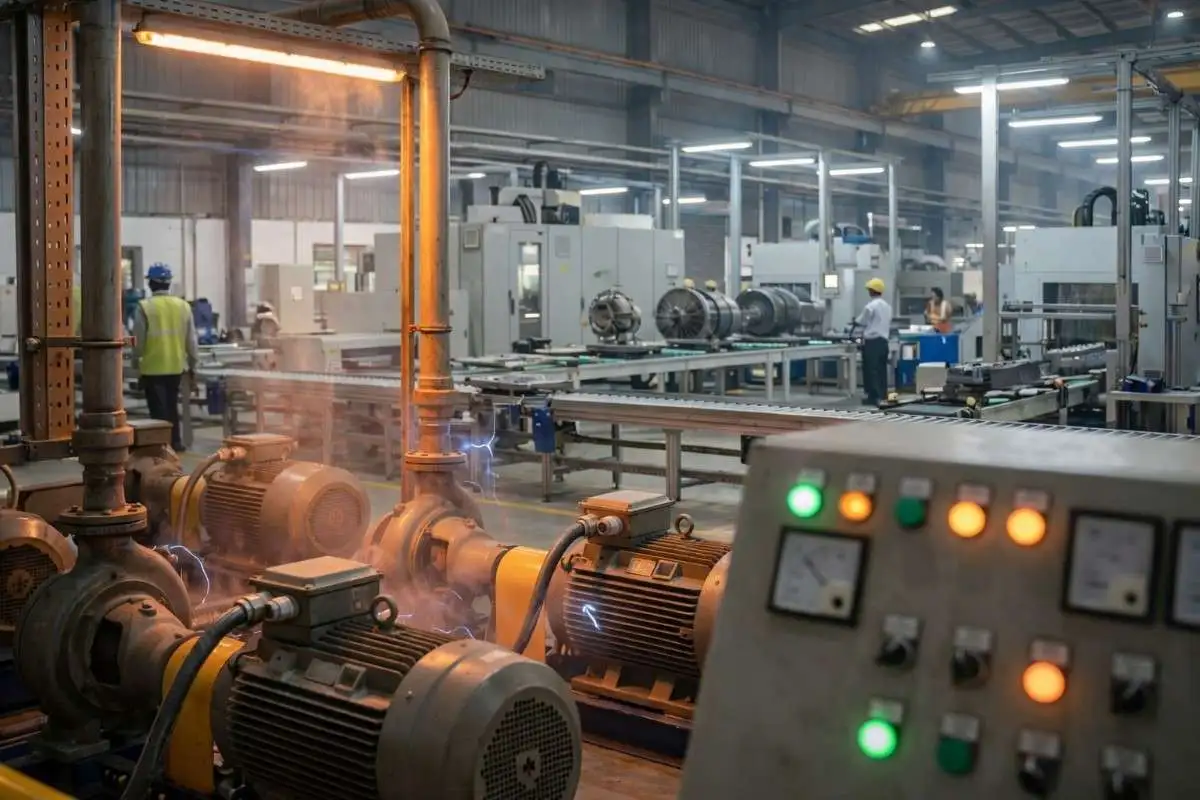
In many manufacturing plants, machine breakdowns still feel sudden. One shift everything runs normally, and the next shift a critical machine stops working. Production targets get missed, maintenance teams rush for emergency repairs, and the cost of unplanned downtime in manufacturing keeps increasing. Most factory owners believe these failures happen without warning, but that is rarely true. Machines usually show early signs of trouble days before they actually fail. The problem is that these signs are too small and too complex for humans to notice consistently. This is where AI anomaly detection in manufacturing plays a crucial role. By continuously analyzing machine data, AI can detect abnormal behavior early and support predictive maintenance using AI, often allowing factories to predict failures up to 7–10 days in advance.
This blog explains how AI anomaly detection works, how machine failure prediction using machine learning is achieved, and why more factories are shifting toward AI-based predictive maintenance to improve reliability and reduce downtime.
Why Machine Failures Still Appear “Sudden” in Factories
Most factories still rely on traditional maintenance methods. Machines are either repaired after they fail or serviced on a fixed schedule. While this approach worked in the past, it is no longer enough for modern industrial systems that operate under variable loads and tight production timelines.
The main issue is visibility. Maintenance teams often do not have continuous insight into machine health. Data may exist, but it is scattered, delayed, or not analyzed properly. Because of this, small changes in machine behavior go unnoticed until they grow into major failures.
Common reasons why failures seem sudden include:
- Maintenance based on time, not condition
- Manual inspections that miss micro-level changes
- Lack of Real-Time Manufacturing Data analysis
- No system to track long-term performance trends
As a result, factories experience avoidable breakdowns that lead to production loss and emergency costs.
What Is AI Anomaly Detection in Manufacturing?
AI anomaly detection in manufacturing is a data-driven approach where artificial intelligence learns how machines normally behave and then identifies deviations from that normal behavior. An anomaly does not mean the machine has failed; it means something is changing in a way that should be investigated.
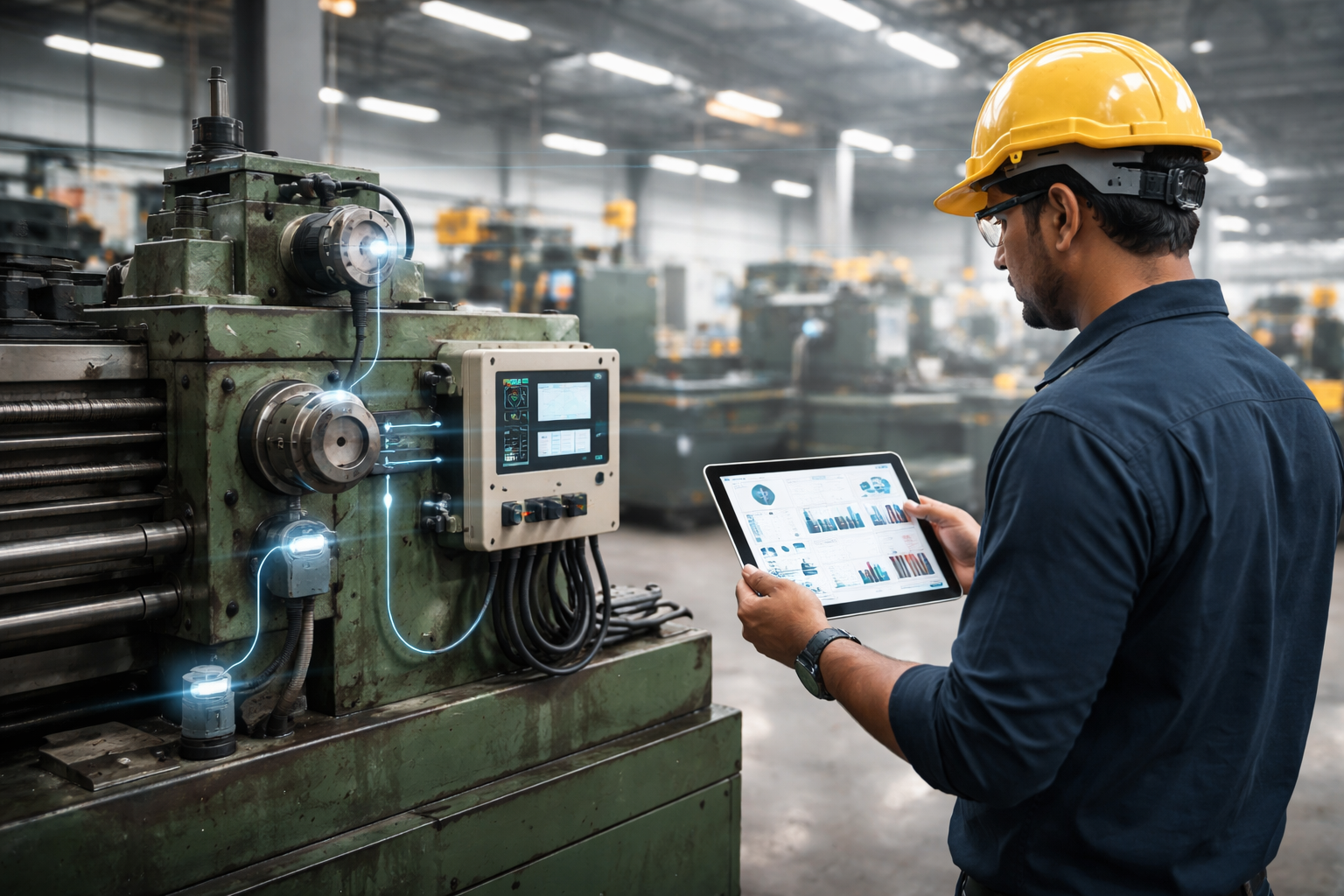
AI systems analyze data coming from sensors installed on industrial machines. This data may include vibration, temperature, pressure, speed, power consumption, and cycle time. Over time, AI builds a baseline of normal operation for each machine.
When current behavior starts deviating from this baseline, the system flags it as an anomaly. These anomalies often appear well before a visible failure occurs, which makes early action possible.
How AI Predicts Machine Failure Before It Happens
Many people ask how AI predicts machine failure when the machine is still running. The answer lies in pattern recognition. Machines do not fail randomly; they follow patterns of wear and stress that develop slowly.
AI continuously compares live data with historical patterns and identifies trends that humans usually miss. This is the foundation of machine failure prediction using machine learning.
The process typically works like this:
- Sensors collect continuous machine data
- AI learns normal operating patterns
- Small deviations are detected early
- Trends are analyzed over time
- Alerts are generated before breakdown
Because this analysis happens 24/7, AI systems are far more reliable than periodic manual checks.
Why AI Can Predict Failures 7–10 Days Earlier
Machines often give weak signals long before failure. A motor may draw slightly more current, a bearing may show minor vibration changes, or a pump may become marginally less efficient. These signals are too small to trigger alarms in traditional systems.
AI, however, focuses on trends rather than thresholds. It notices when multiple small changes occur together and continue over time. This ability allows AI systems to support early failure detection in industrial machines.
AI can predict failures earlier because it:
- Monitors machines continuously
- Detects gradual performance changes
- Learns from historical failure patterns
- Eliminates human guesswork
This is why factories using AI for Predictive Maintenance in Industrial Systems often receive warnings several days before an actual breakdown occurs.
Real-World Example: Early Failure Detection in Industrial Machines
Consider a manufacturing plant running multiple industrial compressors. One compressor begins to show a slight increase in vibration and power usage. The machine still meets production requirements, so operators see no immediate problem.
An AI anomaly detection system identifies this abnormal trend and flags it. Over the next few days, the system observes that the vibration pattern continues to drift away from normal behavior. Maintenance teams are alerted and inspect the machine.
They discover early bearing wear and replace it during a planned maintenance window. This action prevents a sudden failure that could have stopped production for hours. This is a practical example of predict failures days before breakdown using AI-driven insights.
Business Impact of Using AI-Based Predictive Maintenance
The value of AI anomaly detection goes beyond technical improvements. It has a direct impact on operational efficiency and business performance. Factories that implement AI-based predictive maintenance gain better control over their assets.
Key business benefits include:
- Ability to reduce downtime using AI
- Lower emergency repair costs
- Better spare-parts planning
- Improved production scheduling
- Longer equipment lifespan
When failures are predicted early, maintenance becomes planned instead of reactive. This reduces stress on teams and improves overall plant reliability.
AI Anomaly Detection vs Traditional Maintenance Approaches
Understanding the difference between AI-driven and traditional maintenance methods helps clarify why AI adoption is increasing.
| Maintenance Method | Approach | Limitations |
| Reactive Maintenance | Fix after breakdown | High downtime and losses |
| Preventive Maintenance | Fixed schedules | Over-maintenance or missed faults |
| AI-Based Predictive Maintenance | Data-driven predictions | Requires data integration |
Traditional methods rely on assumptions and averages. In contrast, AI adapts to real machine behavior, making it far more effective for modern manufacturing environments.
Role of Industrial Machine Health Monitoring Systems
An Industrial Machine Health Monitoring System acts as the foundation for AI anomaly detection. These systems collect and organize data from machines across the plant. When combined with AI, they provide a clear picture of machine condition at any given time.
Such systems support:
- Continuous machine health monitoring
- Centralized visibility of critical assets
- Faster maintenance decisions
- Better coordination between teams
When factories use machine health monitoring in manufacturing along with AI analytics, they move closer to fully predictive operations.
How AI Works with MIS and SCADA in Manufacturing
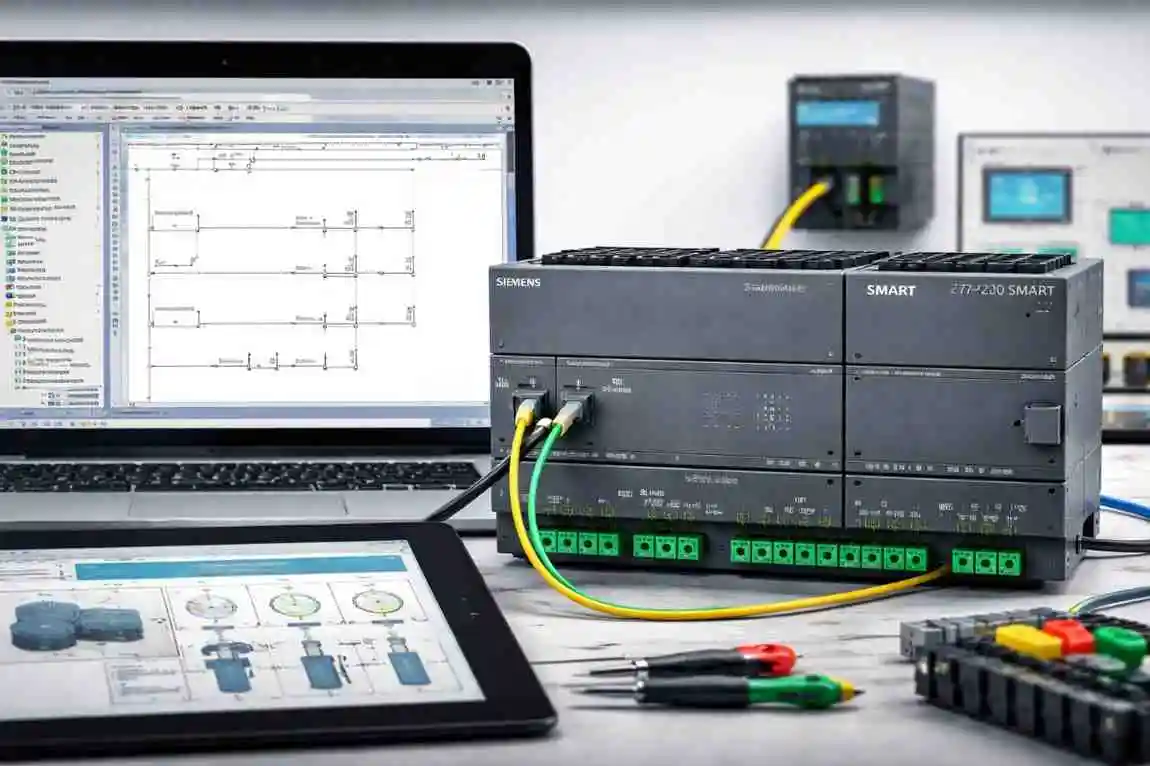
AI anomaly detection delivers maximum value when integrated with existing automation infrastructure such as MIS and SCADA systems. SCADA provides real-time machine data, while MIS structures this data for reporting and analysis.
AI uses this data to generate actionable insights instead of raw numbers. Plant managers can view alerts, trends, and machine health indicators on centralized dashboards, enabling faster and more confident decisions.
This integration helps factories shift from data collection to data-driven action.
When Should a Factory Adopt AI for Predictive Maintenance?
Not every factory needs a full AI rollout immediately. However, many plants are already ready for AI without realizing it. If data is being collected but not used effectively, AI can add immediate value.
Factories should consider AI for predictive maintenance in industrial systems when:
- Downtime significantly affects production targets
- Critical machines have high repair costs
- Maintenance teams rely on reactive decisions
- Machine data is available but underused
Starting with a few critical machines and expanding gradually is often the most practical approach.
Common Challenges and How Factories Overcome Them
Implementing AI anomaly detection does come with challenges, but most are manageable with the right approach.
Typical challenges include:
- Inconsistent sensor data
- Integration with legacy systems
- Initial resistance to new technology
- Need for skill development
These issues are usually resolved through phased implementation, better data practices, and team training. Over time, AI becomes a trusted part of daily maintenance operations.
Conclusion: Moving from Reactive Maintenance to Predictive Intelligence
Machine failures rarely happen without warning. The warning signs are there, hidden in data that humans cannot easily interpret. AI anomaly detection in manufacturing makes these signals visible and actionable.
By enabling machine failure prediction using machine learning, AI allows factories to predict failures up to 10 days earlier. This helps reduce downtime, control maintenance costs, and protect production schedules. When combined with machine health monitoring systems, MIS, and SCADA, AI transforms raw data into predictive intelligence.For factories aiming to stay competitive and reliable, adopting predictive maintenance using AI is no longer a future concept. It is a practical step toward smarter and more resilient manufacturing operations.